

“Anything involving language will be conquered by AI”
A reflection on Yaval Noah Harari’s quote.

Puedes leer y compartir este Artículo en Español <link>
In this article I share a criticism of Yavak Noah Harari given by Jonathan Pageau in a Q&A. Jonathan is an Orthodox iconographer and public thinker whose expertise lies in symbolism – particularly in showing how symbolic structures inform Scripture, religious imagination, liturgy, and the way human beings perceive reality.
Symbolism is relevant to AI because AI models are trained to perceive patterns and relations in language, and symbolism is one of the deepest ways human meaning is structured through them.
Language is not the source of meaning... it is its expression.
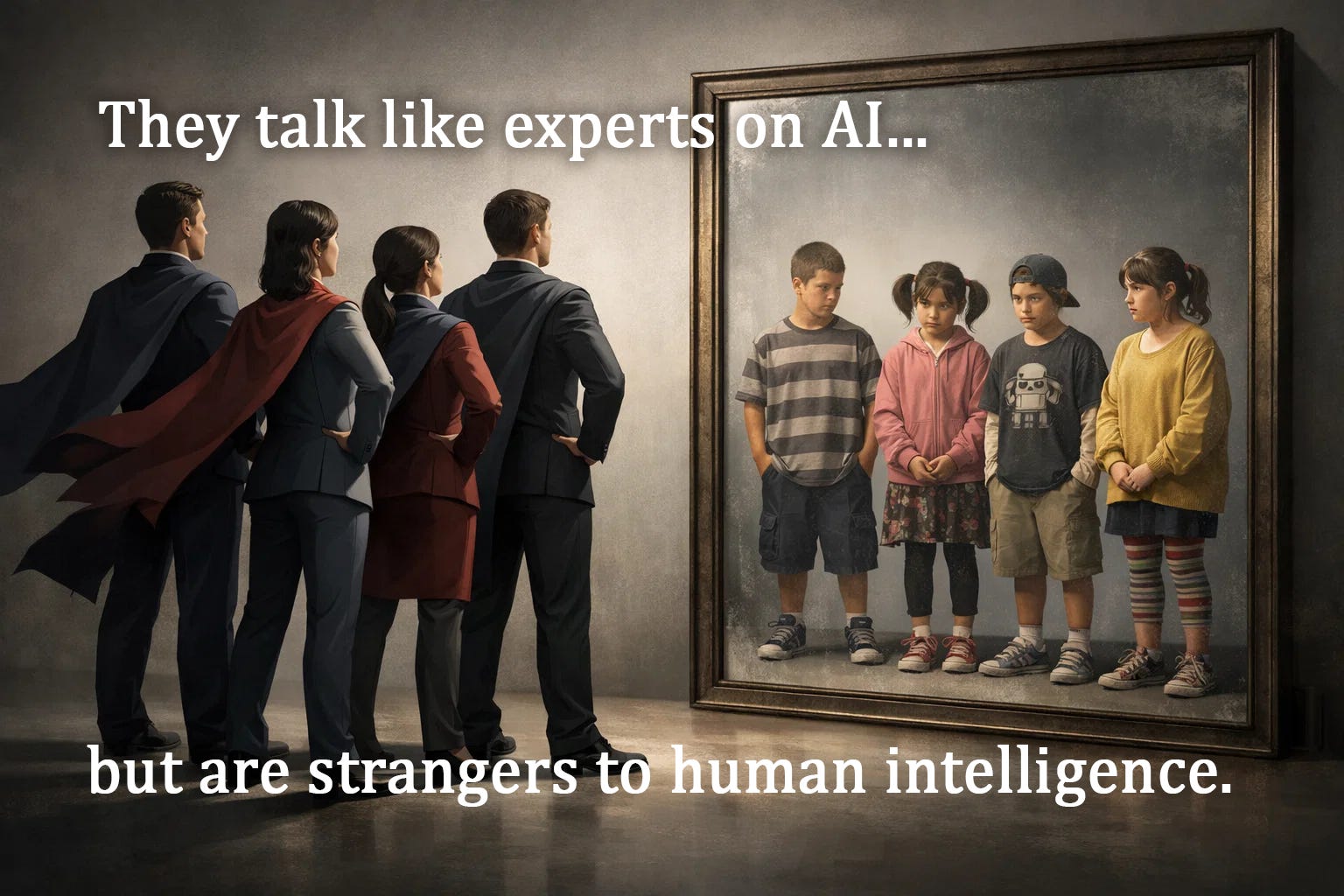
I find it truly necessary to reflect on who we are, because one of the reasons most “experts” on AI falter is due to their lack of understanding what the human mind and intelligence are – who we are.
They falter where most commonly people also do: “we are not sophisticated biological computers” – don’t confuse who we are with what we have created.
Yes, the brain is the most advanced and complex organ that we can find in the cosmos; but we are much more than our brain. We are an intricate organism that surfs the complexity of life seeking purpose and meaning. We command our lives – with actions and decisions – and use our brain power to do so. The quest for identity is a big part of why we are the way we are. The GPS we use to guide ourselves is the discernment of value and purpose; and it uses the brain to do it.
“Garbage in, garbage out”
True, we are conditioned by the habitat we are kerned in and by the way we process the experiences we live through – the story we tell ourselves to cope with the emotional weight we carry through our early years and into our teens.
But that is only part of the picture. Conditioning does not define us completely – it frames the starting point from which we move.
If we falter in our conception of what we use to advance towards an aim, then we are feeding garbage into the very thing we trust to guide us. Our agency does not need a supercharged assistant; it needs direction. We are more than the brainpower or intelligence we devise. We have a hunger for transformation, for advancement, and for clarity – but we will not find it in the things we create.
From this we can infer something more fundamental: it is not the brain’s plasticity that makes us agents; rather, our capacity to change is what gives that plasticity its significance. If we were merely biological computers, we would remain trapped within the limits of our early conditioning. But we do not. We can outgrow, redirect, and reorient ourselves. That does not make the brain irrelevant; it shows that the brain is an instrument in the service of something deeper in us.
Who are we?
There are those who believe there is only the palpable body. Others recognize that in our emotions and ideas there is more – much more than meets the eye. Our body is embedded in the physical world; but then, where is our intellectual and emotional life embedded?
What makes us human is not merely our physical structure, but the way we respond to reality: our patterns of belief, the identity we hold onto, and the meaning we derive from our experiences. These is no reducible to the physical. If anything, it is the physical that is embedded within a deeper layer of reality – one we could call emotional, mental, or even spiritual.
AI is none of these things
I am tired of listening to people say: “AI is going to take over our world” and create chaos. Look around: we are chaotic, our world springs from that chaos, and we are merely doing a balancing act.
We must start developing the skill set and learn how to integrate AI into the processes of decision-making, not trying to figure out how it can be autonomous.
Perhaps the real danger is not that AI will conquer everything involving language, but that we will lower ourselves so much that we begin to believe it can. The more poorly we understand who we are, the more easily we will exaggerate what AI can become.

Here is Jonathan Pageau’s answer in a Q&A section.