

Open Heart Surgery
Returning to the origin of our beliefs, where our desires find order, and where the direction of our life is decided.

Puedes leer y compartir este Artículo en Español <link>
Este artículo fue traducido con la asistencia de Gemini.
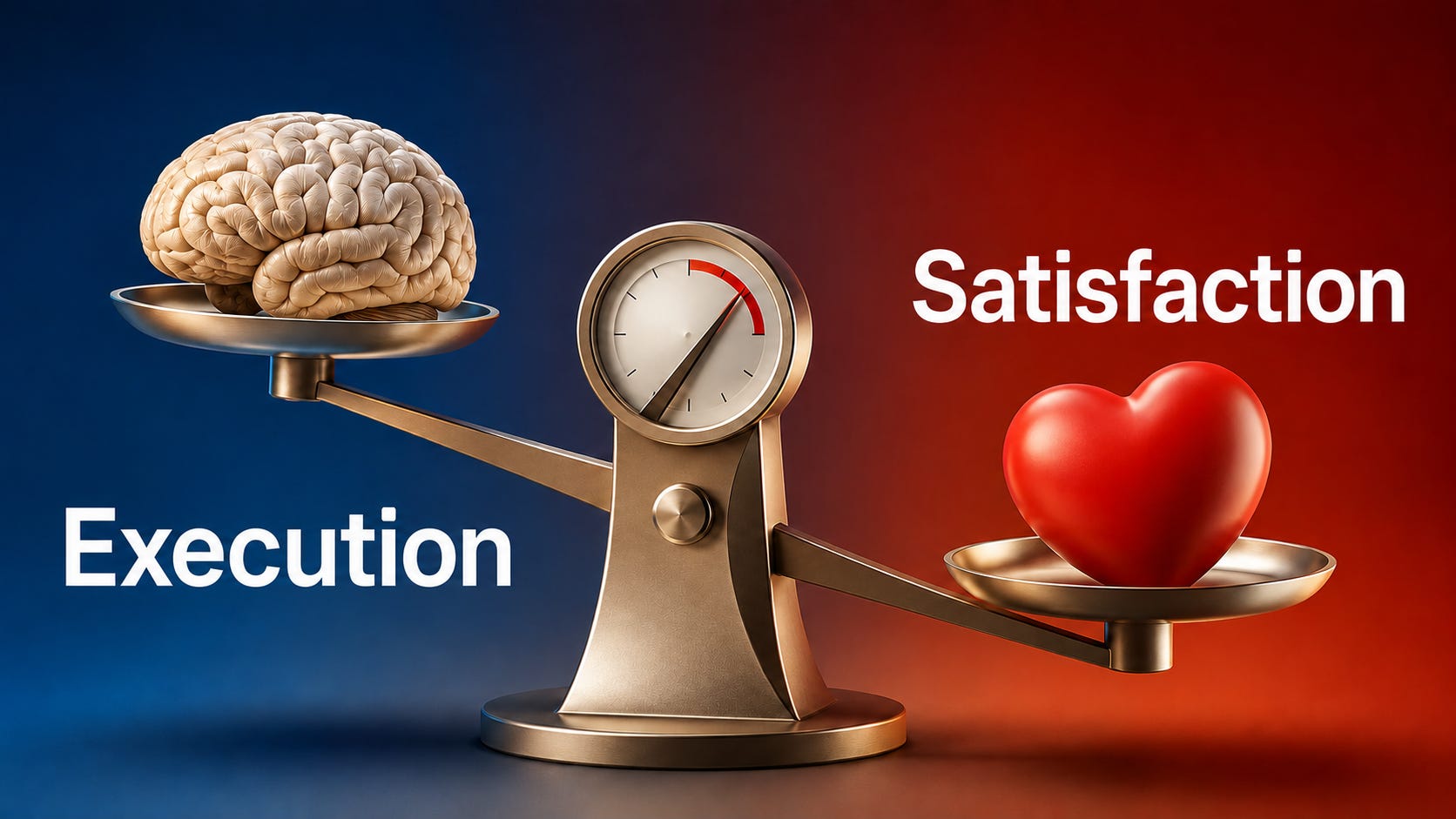
In the autumn of 2022, I set out with the goal of writing a book: CONNECTING THE DOTS. Back in my university years, when I began writing more earnestly, I realized it was necessary to discern between the pain that cornered me and the pivotal moments of my past to make sense of my life. Discovering and embracing each point of pain and disappointment on paper helped me enormously; connecting those dots eventually revealed a meta-image—a overarching narrative—of “who I am.” The book was intended to support people interested in personal growth, helping them construct that meta-image of themselves and use it to connect the dots of their own lives through practical exercises—ultimately fostering a connection with that Extraordinary Dimension within us to anchor the transformation we long for.
What happened? Reality set in. I realized it would take me years to write the book, and as long again to find a publisher. My primary motivation to write was to discern my own path more deeply, discover my “voice” in the process, and hopefully help others do the same. So I asked myself: why not just write?
That is how this column began.
I’ve discovered that all the discernment and sifting through ideas and emotions I’ve done since September 2022 points to a single neural center: my heart. I think I’m going to camp here for a while and—at full lung capacity—descend into the depths that house the core of who I was, who I am, and who I can become.
I know it is an inexhaustible treasure—not only for me, but for all of us—to uncover the mystery that we are.
INTRO / The Heart: The Center of My Will
In biblical culture, the center of the human will is translated as the heart; as such, it is the center of one’s being. In antiquity, several cultures lacked a word for the brain, and many understood the heart as the decision-making center—where things were comprehended and connected, where love and fear resided, and where the impulse to action originated.
In modern times, we think of the heart primarily as the engine of our circulatory system, alongside a few stickier, more sentimental connotations. The heart I refer to—the heart as understood in antiquity—is the energetic pivot from which we believe, understand, and decide, and from which we are impelled toward action: it is, simultaneously, the mirror of the soul and the epicenter from which the human psyche emanates.
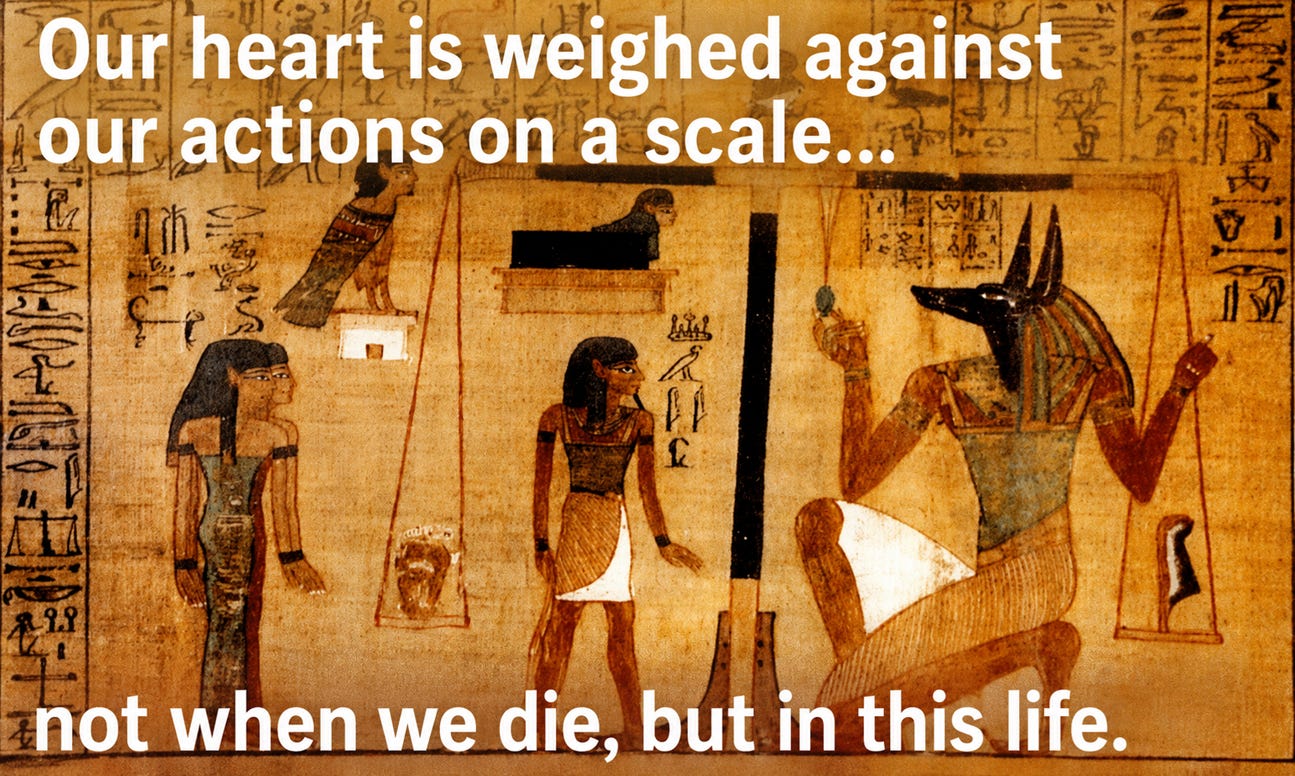
Image: Juicio de Osiris, Wikipedia. (Detail of the Weighing of the Heart ritual performed by Anubis, Chapter 125 of Book of the Dead del papiro de Ani.)
The “Head-Centered Being” Paradigm: A Historical Reference
Following Phineas Gage’s accident in 1848—when an iron rod completely pierced his frontal lobe—his personality was entirely altered, even though all his vital signs indicated normal bodily health. Subsequent research revealed that a significant portion of personality was “housed” in the brain’s frontal lobe; though it would be more accurate to say it was “encoded” or functioned through that region.
Popularly, this was processed as proof that the center of our being resides in the brain (providing certain scientists and proselytizing atheists with the “evidence” to discard soul, God, and creation at a single stroke). Compounded by the fact that we are highly visual creatures, and that we conceptually position our internal dialogue inside the head, culturally we arrived at the belief and internal “feeling” that what we fundamentally are lives in our heads.
Shifting the “Core of Being”: An Essential Displacement
I do not know how connected you are to your body, but the epicenter of decisions and certainties is not felt or centered in the head; it is perceived between the chest and the solar plexus. The will is not a logical process—though logic can inform it. The will is a movement toward something, driven from within. That energetic locus has its epicenter in the chest, which is why in modern terms we call it the heart.
This is why, when a sharp rift emerges between what we expect (the fruit of our beliefs) and what we experience (reality), the natural tension in the solar plexus can break down. An individual may experience shortness of breath, hyperventilation, or even physical nausea from being unable to process that disconnection.
Beliefs: The Fire of the Heart
I cannot live without trust; nothing destabilizes a person more than its absence. You may feel it is not particularly important, or that some people overvalue their self-confidence to the point of becoming pretentious and arrogant. That is not the trust I am talking about. It is something far more foundational: the primary certainty that allows me to engage with events, circumstances, or people that confirm who I believe I am and ground me in where I stand. It is a “plumb line” of being.
Take, for instance, the trust that the building I am currently in is constructed well enough not to collapse on my head. That trust allows me to relax, perceive my surroundings, and focus on my work. Similarly, the confirmation from people in my inner circle or friendships that my behavior is acceptable and fitting forms the baseline that keeps me anchored in sanity. If either of those points is moderatly compromised, my immediate impulse would be to run wildly into the street, screaming to escape my own life.
From that “trust” emerges the force that allows us to propel ourselves through our beliefs toward the goals we consciously choose to pursue.
Beliefs and FAITH are the pair that sustains our entire being every day. “Faith” that my actions will lead me to the place I “believe” in.
Let’s start with beliefs…
Beliefs and Their Subterranean Reality
The fundamental issue is that our earliest beliefs were formed when we were still unconscious. As infants, we encounter discomforts—feeling alone, cold, or hungry—and we cry to draw the attention of those who, by experience and evidence, we knew could resolve that adversity. Within us, a belief begins to take shape: a narrative that makes sense of what is happening and provides a mechanism to effect change—a relationship between an action and an outcome to relieve discomfort. A framework of what is real (pain, discomfort) and what we must do to avoid or alleviate it.
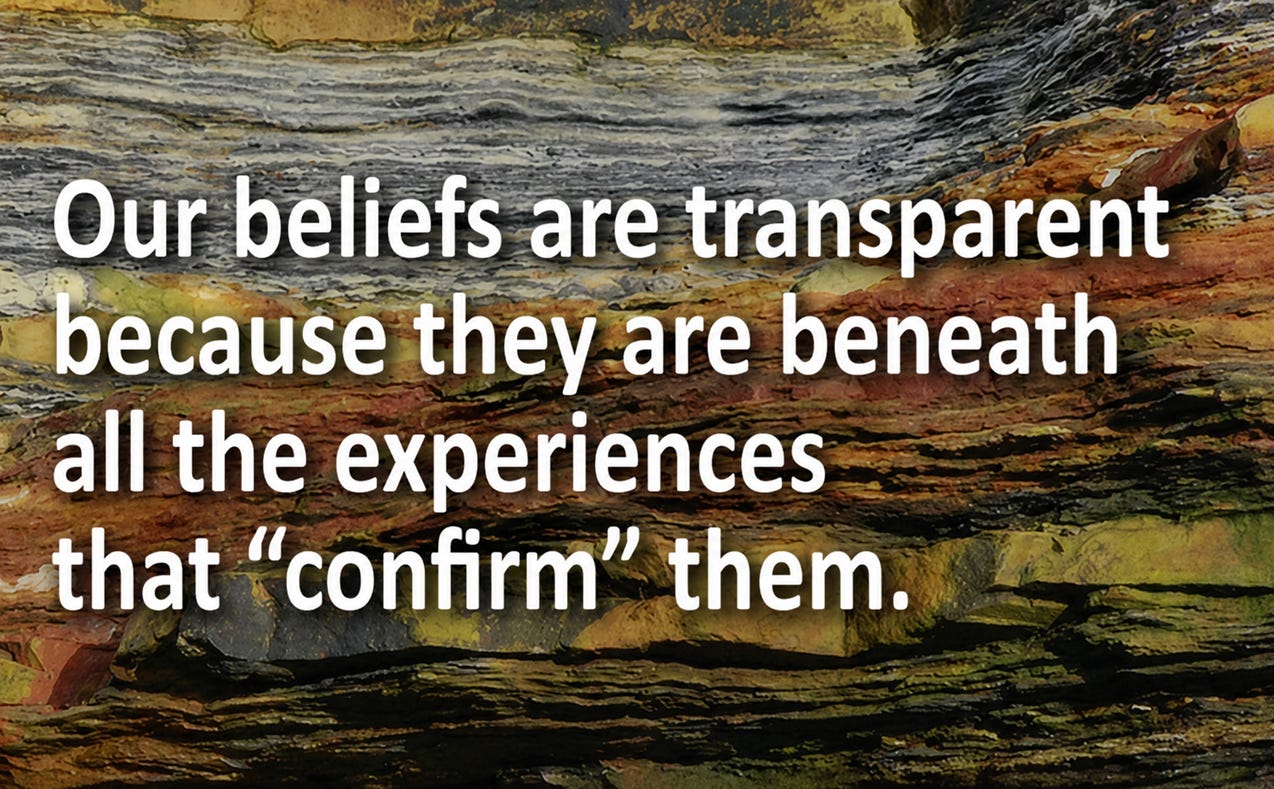
Experience upon experience builds patterns. The beliefs that help us make sense of things and direct our movement toward “well-being” become buried beneath continuous layers of experience, sealing them into our subconscious like geological strata of psychic sedimentation.
Hence, the validation of a belief is simply: “because that’s just the way it is; it’s true.” The beliefs that drive and define us most deeply are completely transparent to our conscious mind. They sit beneath all the confirmations, facts, and evidence that ratify them as true. Our faith is believing they are real and acting accordingly.
The Problem with Faith
The Oxford Dictionary defines faith as “complete trust or confidence in someone or something.” The Dictionary of the Royal Spanish Academy points to it as “a set of beliefs of a religion” and “assurance, assertion that something is true.”
I believe the best definition of faith was written by an anonymous New Testament writer: “Faith is the assurance of things hoped for, the conviction of things not seen.” (Hebrews 11:1)
It is difficult to clarify ideas when words carry so much historical baggage and misinformation, as is the case with the concept of faith and its religious traditions.
Faith is “the substance of things not seen.” The depth of hope lies in the firmness with which you hold a belief. The problem arises when the belief is transparent—sitting there for reasons and expectations formed long ago, perhaps when you were a child.
Let me share a personal example:
As a child, I had a brother five years older than me. When we rode in the car, I couldn’t sit in the front seat because “he was the oldest.” At night, while he was outside talking with friends in front of the house, I had to go to bed at 8:00 PM while he stayed up until 9:00 PM. I couldn’t stay up past my bedtime “because I was younger.” The relationship with my brother was tense, and he frequently made sure I felt that “he could, and I couldn’t”—typical childhood dynamics.
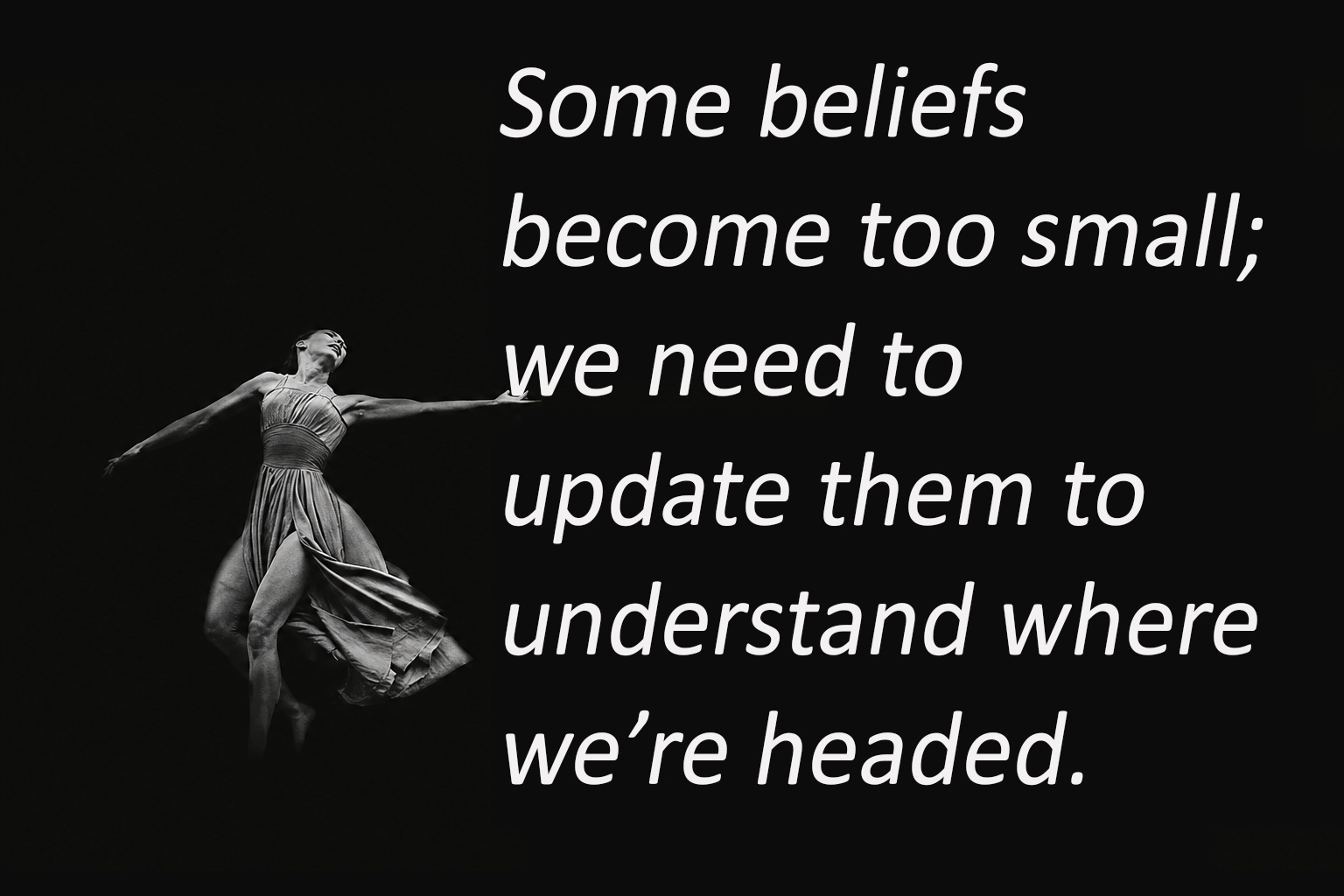
To cope with that frustration, I adopted what my parents told me as a core belief: “I can’t because I’m small.” That belief was functional and served me as a child. It was gradually buried beneath other beliefs, serving as the soil for even more assumptions. As a child, it protected me from the stress of craving what I couldn’t have or achieve. But as an adult, that same belief became deeply limiting.
I had to compensate by taking on immense responsibility. Yet until I discovered that this belief was operating clandestinely within my psyche, I was essentially plowing the sea. No matter how hard I worked or how much responsibility I assumed, the hidden belief—“I can’t because I’m small”—sabotaged my efforts to reach higher, constantly keeping me in the role of “the small one who couldn’t.”
Freudian complexes are psychic structures that underpin personality. Until you consciously begin to unravel a belief by choice, all your certainties rest on a house of cards anchored by transparent beliefs. Faith is that certainty impelling us to act; it rests on belief and provides direction and outcome. Thus, they are two sides of the same coin guiding our lives.
What the Heart Means to Me
I hold the narrative I construct about life within my heart. When I look toward something I want to achieve, I transform it into an image inside my heart that pulls my attention and conditions how I view and understand the world. It “conditions” it because the heart acts as a massive dynamo, amplifying everything I seek or desire and shaping who I am.
Therefore, we must be exceptionally clear about what we aim to reach—because that aim will ultimately define who we are and how we live our lives.

Epilogue
Why This Matters in the Age of AI
Ethics can align our actions toward an outcome that elevates the individual, the organization, and everything around them; or it can do the opposite: sever the connections that anchor what sustains us.
If what we seek conditions how we see the world and who we become, and if our heart houses the narrative through which we interpret life, we had better have clarity about our aims—because our end ultimately defines our existence.
This has always been essential. But in the age of AI, it becomes far more urgent. A tool capable of amplifying our intelligence, accelerating our decisions, and extending our capabilities will likewise amplify our limitations, our unexamined emotions, and our deepest motivations.
That is why, before asking what AI can do for us, we must ask ourselves once again who we are, what we truly seek, and from what kind of heart our decisions are flowing.

