

Puedes leer y compartir este Articulo en Español <link>
This article was translated with the assistance of Gemini.
Human reality is constructed in the form of a narrative... from the perception of reality to how our brain processes absolutely everything around us. Our identity is the narrative we tell ourselves. We continuously contrast and confirm it with others in our environment; that relationship, when healthy and balanced, is what keeps us on the side of sanity. Identity is coined from our childhood through beliefs we form to overcome all the adversities we face and which operate within us; our identity is the vital skeleton of our sensory, intellectual, and emotional life.
Reality is constituted by an infinite amount of data points, and we understand it by assigning value to each piece we perceive or interact with. Our reality, our life, what we experience and live, is the projection of the beliefs and values we assign to what we perceive; a series of narratives we tell ourselves at every moment... "narratives" imperceptible to our consciousness that we construct with that assignment of "value."
Beliefs operate as a compass that unveils the meaning and value of absolutely everything.
"We do not perceive the world as it is. We perceive the world as a function of what matters to us" (Dr. Jordan Peterson). We see what our values, beliefs, and, above all, our objectives make relevant. Human perception does not begin by asking "what am I seeing?", but rather "what does this mean for the path I am walking?".
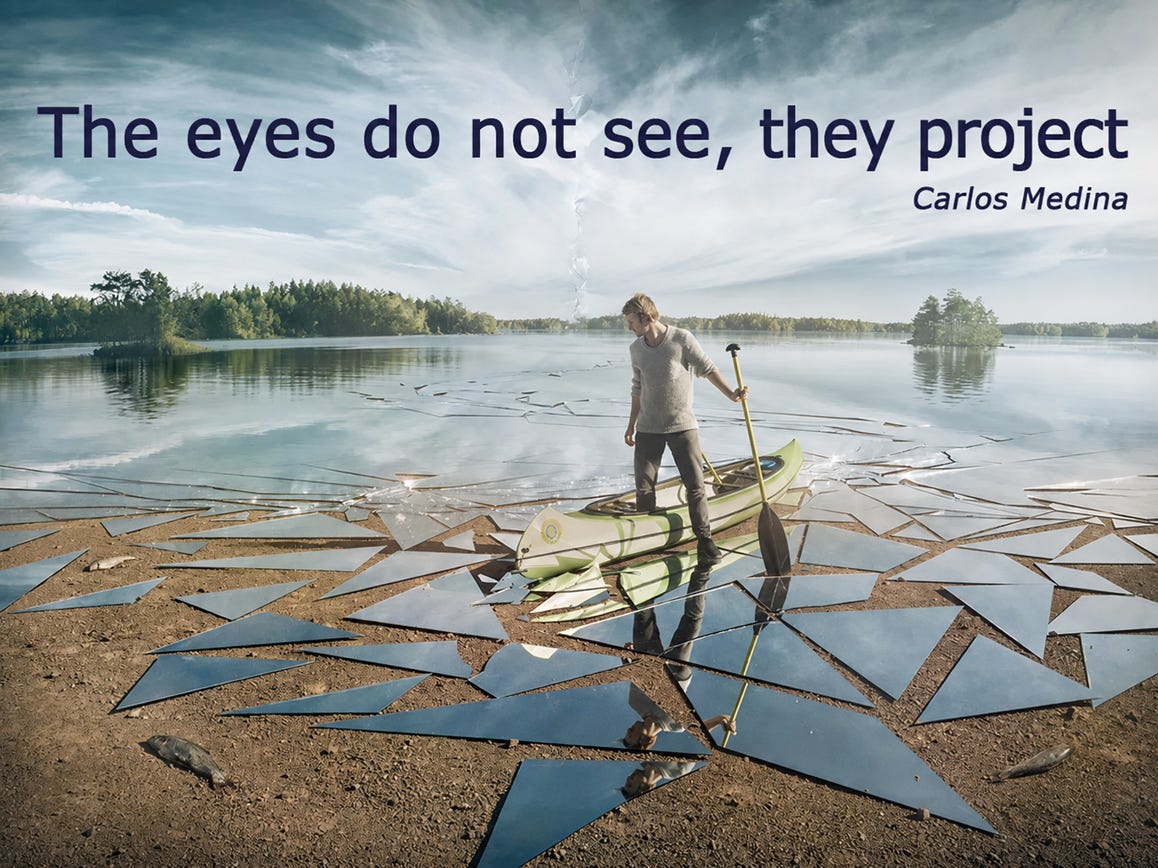
That which we call “knowing ourselves” is unraveling those narratives, approaching them, recognizing them, accepting them, and weighing them to see if that is the kind of life I want to live... and if it is not (my experience is that IN ALL CASES it is not), then we have the complex task of accepting it, changing direction, and beginning the ascent by discerning the “Right Narrative” or main argument.
Betting, with the highest degree of confidence, that THIS NEW NARRATIVE is the one that approaches the narrative that will truly build the life we want to live.
What is Faith?
Conscious or not, we believe and trust in the narratives in our heads; we operate based on them. Suppose you consciously seek success in your career: the narrative of who “you will be” pulls at “who you are” to reach the consequence that your inner vision unveils to you. You sacrifice time, being with those you love most, doing what you like or motivates you most; you sacrifice it to that narrative that has a visual icon: Success! (whatever that may be for you).
If we have not resolved or unraveled the beliefs forged to ensure our survival as infants, when we experienced fear, hunger, or isolation... that becomes the narrative coined within those experiences that helped us survive. Consequently, that narrative covertly controls and guides our lives... not toward who we can become, but toward the repetition of who we learned to be in order to survive.
It is only natural: on one hand, we were defenseless, feeling it in every fiber of our being; on the other, our parents also carried unresolved fears from when they were in that same position (our world is fundamentally broken, and deep down, we know it). Faced with adversity as infants, we cried to attract the attention of whoever could save us from our helplessness. This mechanism is so deeply ingrained in us that when adversity resurfaces in adulthood, in whatever form, our “natural” response is to recoil, complain, resent, criticize, shift responsibility, and retreat into the narrative that forged that belief to make us feel secure—”regressing” into defenseless infants. It is only when we decide to take accountability for what we feel that we qualitatively advance to another level. Because, ultimately, “adversity” is a projected illusion—not because it does not exist, but because what we perceive in it reveals, above all else, exactly where we are stuck.
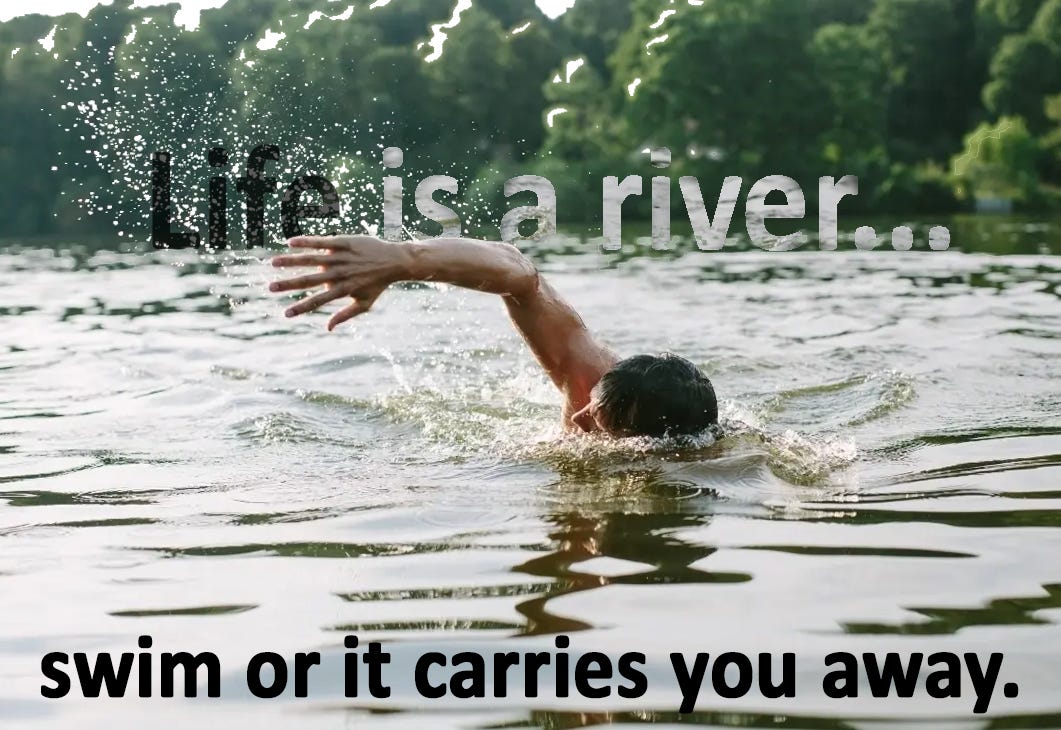
Faith is what allows me to navigate the narrative in the river of my life. If the beliefs are not conscious, I spill over and return to my reactions from when I was a baby; if I seek and pursue another narrative that I have formed in my heart of who I want to become, then faith allows me to navigate the storms that form due to the opposition of the currents between both narratives.
Faith is that trust that sees beyond present circumstances, holding the vision of what I do not yet grasp.
It is nourished by the understanding of the process and drives me to seek the narrative I see in who I can become.
“Faith is the certainty of what is hoped for, the substance of what is not seen.”
— Hebrews 11:1
The key word is "trust." Adult faith is a light that reveals the flesh upon the bones of my beliefs, allowing me to act within the narrative of "who I tell myself I am" to reach "who I wish to become."
La palabra clave es “confianza”, la fe adulta es una luz que me permite descubrir la carne sobre los huesos de mis creencias y actuar en ese relato “que me cuento que soy” para alcanzar “quién quiero llegar a ser.”
Who is the Human Being?
Faith and beliefs are an intrinsic part of who we are; we cannot separate ourselves from them. What we place at the top of our scale of values is either modeled by the beliefs of what you do not know and operates within you... or you model it consciously with your will, using the trust (faith) that you can generate said vision of who you see at the end of that journey or narrative.
That which you do not know models you.
We continuously discern, discriminate, and separate what we believe brings us closer to or further from the narrative our identity confers upon us.
Since time immemorial, wise and serious men and women have tried to discern this juncture of Being: what do I place at the summit of that scale of values so that it pulls me toward a worthy life? The great problem is that, when this “objective” is not transcendent, exogenous, greater than myself, and Good in essence, I get lost and will not find in myself the strength to advance: “I lose myself in the labyrinth of my existence.” Instead, if I place a Good, Great “objective” at the summit, one that includes much more than my individual appetites and represents the best I believe I can achieve in life, then, I unveil “why did I come to this earth?” and my life takes on sense and meaning.
That “narrative” is what pulls me, plants itself in my Heart and uses faith to root all the skills, efforts, and sacrifices to achieve it... no other kind of life is worth living.
It is a narrow path.
It is a narrow door.
Photo: Gera Cejas
The Battle for Faith
Some believe in God and place Him at the pinnacle of that scale; others deny God’s existence and argue that “reason” belongs at the top. What you believe is secondary; the undeniable fact is that you always believe in something. You are the narrative concealed within your Heart because you “trust” you can achieve it. If you view yourself as a victim, you believe others strip away your value. If you view yourself as a victor, you trust your capacity to achieve more than what you currently possess or are.
There is no escape: you BELIEVE, and you solidify that belief through your actions. Do not deceive yourself—that Something you place at the summit possesses absolute power to transform your life into its “image and likeness.”
Some dismiss religious faith as foolishness. The version of faith they comprehend likely is foolish. Yet, why look at the speck of sawdust in your brother’s eye and pay no attention to the plank in your own eye? (Matthew 7:3)
Religion is the ultimate state reached when definitions fail to capture what is immeasurable or transcends all categories: The Good, God, or the Divine. If you deny its existence, you are left with fundamental questions you cannot answer:
Why is there order in the Cosmos?
Why is it discernible and intelligible?
What is the Mystery behind that order?
Why do we possess an innate measure of justice and injustice?
Some call that Mystery God because it defies categorization and acts as the foundation of all things. Plato called it The Good.
Make no mistake: answering the question is not the priority. What truly matters is your openness to that which is vastly greater than yourself, pulling you to become more. Through the mysterious structure of life, it uses everything to draw you toward Him.
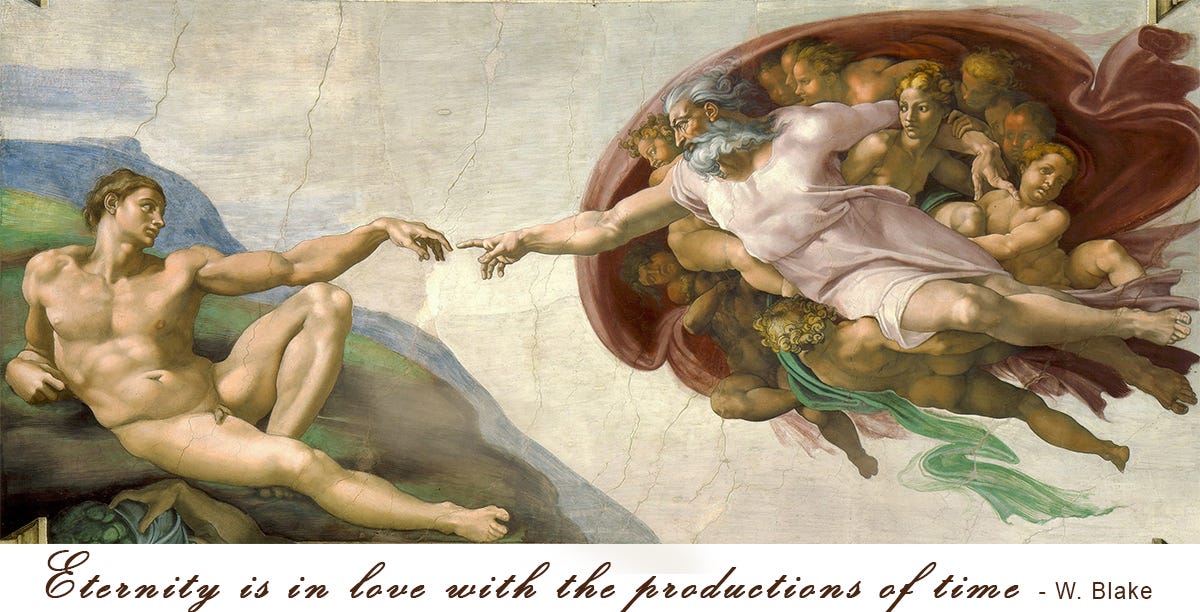
If you reject all of this, how do you account for Beauty or Pain? They hold meaning because they point toward Something, capable of leading you to the most sublime or devastating experiences. Perhaps the issue is not the validity of religious faith, but rather that you—the unbeliever—must “update” your faith to encompass far more than what you currently see or envision. Perhaps you have not done this since infancy. It is your faith that must expand to integrate the narratives you cannot explain, yet which shape and possess the potential to transform your life.

Epilogue
Integrating AI without first examining your origins, your beliefs, and your motivations merely opens the door to a more efficient form of self-deception.
Plato stated it clearly through Socrates: “The unexamined life is not worth living.” What underlying belief is at work when you introduce this device we have deemed “intelligent” into your workflow or your discernment?
If you lack the habit of introspection and cannot identify your own beliefs, who is truly operating the AI? To what end? Toward what goal? If you do not know the answers, you are not the one wielding the tool.
If this highly capable “intelligence” serves any true purpose, it is to strip away our capacity for easy self-deception. Previously, we could err and delay the consequences; with AI, that timeline collapses. The less conscious we remain of our motives, the more forcefully those consequences will strike us.


EL PUNTO a la i
El historial de la columna está en cdots.substack por si quieres revisar artículos anteriores.